INSURANCE CONTRACT [POLICY] LANGUAGE — SOME HISTORY

COVERAGE CLAUSE OF LATE 14th CENTURY ITALIAN MARITIME POLICY

Here is the coverage language of a policy issued in Florence in 1397:

Covered Perils: “of God, the seas, of nations, fire, jettisons restraints of lords [perhaps princes?] or peoples, or any other person, or letters marque, of arrest, and of every other case, peril, chance, impediment or mishap, which in any way could occur, or might have occurred, no matter how or under what conditions the cases might occur, excepting only what concerns customs dues and ballast [perhaps stowage].”

This language is quoted in Harold E. Raynes, A HISTORY OF BRITISH INSURANCE 10 (2nd Ed. 1964). The author states that the probably meaning of some of these terms approximate meanings standardly found in “the sixteenth-century marine insurance policy adopted in the Office of Insurance in London, and afterward incorporated in the Lloyd’s policy based thereon.” Id at 10-11.

Read More
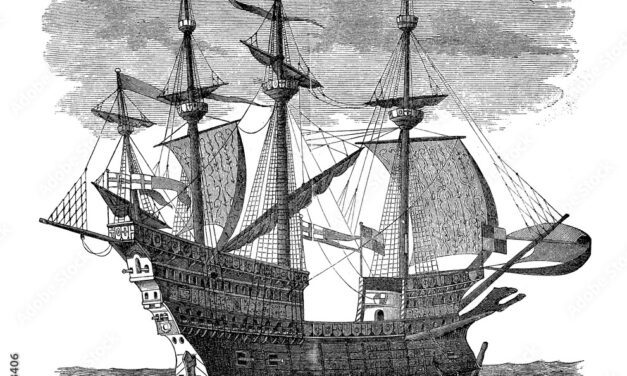

INSURANCE CONTRACT LANGUAGE: MARITIME INSURANCE

EARLY “PURE” CONTRACT OF INSURANCE

It has been said that the following is part of the first transaction which was purely one of insurance.  It called itself a “free and friendly loan,” but that often simply means that it is insurance. Maybe that average was required for reasons of legal procedure and/or the applicable law of evidence.

The date of the contract was October 23, 1347.

The background for understanding the contract is this: Georgius Lecabelliam acknowledges that he has received from one Bartholomeus Bassus a sum of money, by means of a “free and friendly loan” and promised solemnly [under an oath of some sort?] to restore the sum to Bartholomeus. However, the document goes on as follows:

“If your ship[,] the Santa Clara…now in Genoa…go[es] and sail[s] presently to Majorca, being navigated by [a] direct route from the port of Genoa to the Majorca and arrive[s] at that place safe and sound before the expiration of the next six months, then[,] in that case[,] the present contract is null and void.“I [Georgius] personally assume all the risk and responsibility for said sum until the ship shall have arrived at Majora, being navigated by direct route. And also, if the said ship shall be safe and sound in some other place before the said six months, the present contract is null and void. And likewise, if the said ship shall have changed its course[,] the said contract shall be null and void.”

The contract contains another clause imposing on Georgius an obligation to pay double to Bartholomeus, plus costs, if he failed to comply with the contract in a timely manner. The ship’s showing up in the wrong place and its changing course are exclusions. I am not sure why these excluding are included. If the Santa Clara goes to a different port and then turns around and goes to Majorca within the policy period, it’s hard to see what the problem might be. Maybe Georgius was trying to prevent any routing that might lead to a problem. Similarly, I am not clear about what the “change of course” is doing there. Maybe it’s this: Santa Clara cannot engage in smuggling while it is heading toward its announced destination.

The quoted language was taken from Harold E. Raynes, A HISTORY OF BRITISH INSURANCE 8 (2 ed. 1964).

The money Georgius received from Bartholomeus is (or is very much like) a premium. The ship not showing up or showing up but not sound, is the occurrence covered. The amount of the free and friendly loan is the policy limit. It seems to me that the pay-double clause is a way of dealing with fourteenth-century insurance bad faith.

So, why is damage to the ship deliberately inflicted by the insured not excluded even if the ship gets to Majorica on time? Obviously, if the ship is not sound when it arrives, there is no coverage not even partial anyway.

Notice, by the way, the cargo is not covered.

Keep in mind that the language of maritime policies was the model for all other types of first-party policies.

Read More

AGREEMENTS UNDER INTERNATONAL LAW: A SPECIAL CASE

 AGREEMENTS–“NEAR TREATIES”– UNDER INTER- NATIONAL LAW–HOW TO READ THEM–A SPECIAL CASEThe answer is really quite simple, at least for Anglo-American readers, like educated lawyers. They are to be read as if they are statutes. Broadly speaking, the principles of how to do this stretch back centuries in English-speaking law. It is also important that, at least roughly, the same rules apply to “civil law.” This means that at least French speakers will read them the same way.  It also suggests that the  German and Italian legal systems do the same thing, at least roughly. That, in turn, suggests that the EU system will be more-or-less the same. There are together historical conceptualizations as to how to interpret international agreements. The United States Supreme Court has thought of them as a type of contract, and that is obviously a reasonable approach since they are agreements. Still, so far as interpretation is concerned, common law and civil are not that different, at least on the surface. In modern times there is another source of authority and wisdom, and that is the 1969 Vienna Convention  (aka, “the treaty regarding treaties”). Its use is international practice, even among states that have not formally ratified it. Here is the fundamental rule for the interpretation of international treaties, etc.“A treaty shall be interpreted in good faith in accordance with the ordinary meaning to be given
to the terms of the treaty in their context and in the light of its object and purpose.” This is a subsection of another subsection entitled “General Rule of Interpretation.” Sound familiar?Of course, the Vienna Convention is for agreements between “states” and, as the “Trump-Taliban Agreement” of 2020 states several times, the Taliman is not recognized as a state by the USA. Still, as I just said the Treaty on Treaties is very widely used and is considered an international standard. Of course, this Agreement is not itself a “treaty,” but for roughly the same reasons, that fact is practically speaking irrelevant. In political context, it’s a “virtual treaty,” in the traditional sense of “virtual,” as opposed to the new “digital age” meaning.Here is the title of the document. It tells a reading lawyer a good deal. I shall discuss some of the contents on another occasion:Agreement for Bringing Peace to Afghanistanbetween the Islamic Emirate of Afghanistan which is not recognized by the                     United States [the indentation here is not part of the original document]as a state and is known as the Taliban and the United States of America

Read More

Law, Conservatism, and Creativity

LAW’S INHERENT CONSERVATISM AND THE LIMITS ON CREATIVITY

By their nature legal systems are mostly conservative. For the most part, the future must rely on the past, at least because legal decisions must be predictable in order to be justice.  Of course, this is not always true, but it is true most of the time. Moreover, most changes are gradual again because predictability can be, and often is paramount. (This is one of the reasons why so-called “systemic racism” is so hard to wipe out.) My point may apply especially to legal systems that are precedential, as–the example–the common law systems are. The doctrine of stare decisis remains very important even in contexts where statutes are also of basic importance, as come to be the case in the United States.

The trouble with this feature of legal systems is that creativity in legal conceptualization and reasoning are very, very limited. It is virtually impossible to break loose from established frameworks and strike out in novel or really innovative directions. This is for law professors, mostly, whose work is found in advanced and prestigious law reviews or occasionally books. (Even legal treatises for practitioners, including judges, are not for creativity.)—MSQ

Occasionally, there are exceptions. In the area of insurance law many years ago a device was created to “force” liability insurers to settle some cases by building the self-interest of the insurer into litigation practice. That was a major innovation, and it has substantially shaped tort litigation. More recently a tort doctrine of bad faith was devised to require first-party insurers to pay more attention to the interests of insureds. That more or less began as a common law doctrine but quickly became “statutorized,” and the original openness to legal creativity was squelched, though the statutory systems had many benefits.  I will come back to this topic soon.

Oh well. Creativity as to concepts and reasoning has never–at least for the most part–been central to legal practice. However, I wonder if this is not part of the reason that members of the category of the “best and brightest” find the practice of law limiting, stultifying,  and even depressing.

Nevertheless, because of its inherent conservatism, a legal culture like that in the U.S. will always involve “Critical Theories.” Here’s a recent example, “Critical Theory of Systemic Racism.”

Read More

ANTITRUST LAWSUITS AGAINST BIG TECH GIANTS

MONOPOLIES BE DAMNED–FULL SPEED AHEAD!

Ive always loved antitrust law. It was one of my favorite courses in law school. I was a sucker for old-school progressivism. Alas, I recognized immediately that, while it would be wonderful to think about these sorts of public policy issues almost every day (even if I didn’t have a Ph.D. in economics) it would be boring–totally ho-hum–actually try to such cases, not to mention the problem of falling asleep listening to nearly incoherent fact-answers, whilst taking the fact depositions in such cases.

Granted, the expert witnesses might be a little more interesting; still, while some mathematics is captivating, some is most certainly not.—MSQ

The times changed, however, and most of these cases never really got started. Apparently, those dreamy days are over for a while. Governments and individuals are all suing big tech companies right and left for monopolizing. The “Business” section of the New York Times headlined an article “Boom Times for Lawyers As Big Tech Faces Foes.” 

Granted Cecilia Kang and David McCabe, indicate that all the jobs will land upon the largest and most prestigious law firms—those the partners of which have the greatest capacity for overcoming sleepiness. Or at least not appear to be dozing, and–above all–not snore. 

They don’t say anything about it, but everyone with experience knows that some of these depositions will still be “virtual” or “Zoom” depositions. Talk about truly profound boredom and drowsiness!

At the same time, they report the extraordinary revenue to be generated for these worthies. Each of the partners will be charging hourly fees in the thousands while the fees of associates will be in the several hundred.

Look at it this way you egalitarian cynics, those kids will actually be able to pay off their huge student debt in record time, even given their Manhattan rents.

Me? I feel sorry for the lawyers in some of the government offices who will pursue the cases. They will watch the private lawyers dining on lobster, while they stick to cheeseburgers, even if they are double in size with bacon. Oh well, at least all of them below the senior partner level are working 60-70 hour work weeks. I suppose that is a kind of restricted classlessness. 

Still, I think that the pursuit of these lawsuits is a good thing. It leans in the right direction when it comes to public policy. Too bad Elizabeth Warren probably couldn’t be an expert witness. Still, the plaintiff lawyers will have the pleasure of learning from and utilizing the brilliant Dick Markovits, and people like him.  (Paul Krugman would also be a great witness, though for different reasons, but, in the sense required by federal rules of court, he probably would not qualify as “reliable” given his well-known political polemics.) 

At the same time, I cannot help but wonder if all of these government suits are on the up-and-up. The one from Texas, for example, is paradoxical. Texas state government, for example, is spending millions recruiting the companies that are defendants to move substantial parts of their operations to Texas. One must wonder if the goal of Texas really isn’t to obtain a certain kind of settlement: Move here brothers, and we’ll drop some of our suit. (Of course, some other co-plaintiff states might have to be going along and getting some of the same benefits, though that is not implausible.) Of course, I find that idea unattractive, to say the least.

Written in the Spring of 2021. Publication forgotten. US gov suit amended in August 2021. A new post will follow.

Read More

Quinn Quotes

Not every mistake made by an insurer in handling a claim inflicts compensable damages upon a claiming insured.  This is true especially if the insurer's error hurt somebody, just not the insured.~Michael Sean Quinn, PhD, JD, CPCU, Etc.Tweet

The books shown are NOT affiliate links.
MSQ (site) does not receive any compensation for books listed or sold.
Books are shown for the reader's convenience only.

Newsletter

Michael Sean Quinn, PhD, JD, CPCU, Etc*., is available as an expert witness in insurance disputes and other litigation matters. Contact