
LAWYER BIRD CRIME: SHOOTING (OR, AT LEAST, TORTURING AND/OR KILLING) THE BIRD

HAWK TRAPPING AND KILLING

Michael Sean Quinn*

It is a crime under federal law, in particular the Migratory Bird Treaty Act, to trap and/or kill red-tailed hawks. A wealthy and ashamed South Carolina L confessed with tears in his eyes to doing exactly. This disgraced SOB was (and maybe still is) a trustee of the University of South Carolina and a member of his church, where perhaps he will find a path to appropriate forgiveness for violations of divinely ordained stewardship. 

L received a light sentence, much to the chagrin of the federal prosecutor who wanted a good deal more. The sentence? A year of probation; 50 hours community service at the Center for Birds of Prey in Awendaw, a one-year hunting ban, and a $75,000.00 fine. 

Justice was done? With less than an hour a week obviously appropriate community service? Maybe. But one might wonder how many legally protected hawks he abused thusly. 

In any case, let this be a lesson to lawyers who love hunting too much. 

*Michael Sean Quinn,

Law Office of Michael Sean Quinn 
aka

Quinn and Quinn

1300 West Lynn Suite 208

Austin, TX 78703

Office Phone: 512-296-2594

Cell: 512-656-0503

Fax: 512-344-9466

Email: mquinn@msqlaw.com

Read More

TRUMP, the JUDGE, and his LAWYERS

A WAY OUT FOR DONALD

There is really only one way out for Donald regarding his attack on the California federal judge over seeing (and perhaps before whom will be tried) the “Trump University” cases. 

1. Make  a personal statement that in those cases his side has lost virtually (if not all) the pretrial motions and that this is unusual in civil litigation, and does not seem fair to him, an experienced litigant . 

2. Have a solid, large law firm release a sort of “legal opinion” sustaining his view, at least to some extent. Issue: Should this document be long or short, detailed or sweeping? Answer: I don’t know. Inclination: Long and detailed, but objective (or objective sounding).  Supplementary idea: Find a professor of civil procedure who wold be willing to issue such an opinion. 

3. As part of his public statement, Donald must say that his passions got the better of him. He did not feel that the motions process was fair, and he lashed out.  He said to himself, “I am proposing the building of a wall right next door, as it were, to the Judges home and court, and his genealogical loyalties–something having nothing to do with race–might be influencing him.  (After all, when someone asks a person “What are you?” they will likely say things like, Italian, Irish, Persian, Korean and not Japanese, and so forth.  This kind of genealogical self-identification is quite common. 

4. Say that his remarks were remarks of passion and apologize for saying what he said in the wrong way and leaving the wrong impression.  (At that point stop. Say nothing about his remarks being misconstrued by others. Own what you said and the responsibility for saying it.)

5. Include a statement that he wishes his lawyers has made sure that he had a better grasp of what was happening. Say under the circumstanced he needed that kind of advise, and that it was not provided, much to his misfortune and that of his lawyers. 

6. Fire all the lawyers representing him or any company he controls in this law suit. 

7. Hire new counsel well know for civility and restraint. Bring in a professor of legal ethics, just for the look of it, if nothing else. 

No reader should make the mistake that have the slightest political sympathies for Mr. Trump’s methods of political presentation or, so far as I can tell, his views. For example, it is false to say unequivocally and without support that NATO is obsolete.  In addition, I find his temperament authoritarian. What other kind of person should possibly believe that he, as president, could himself build the American-Mexican wall.  These points are not qualifications as to the views I set forth above. The only surprise I give to myself about Donald is that the media should listen more carefully as to exactly what he says, as opposed to interpreting what are often “maybe[s]” as “is[s].” If one asserts that proposition p is true, one has not asserted that p is in fact true. 

Not proof read carefully. Matter not worth the time.

*Michael Sean Quinn,

Law Office of Michael Sean Quinn 
AKA

Quinn and Quinn

1300 West Lynn Suite 208

Austin, TX 78703

Office Phone: 512-296-2594

Cell: 512-656-0503

Fax: 512-344-9466

Email: mquinn@msqlaw.com

Read More

Lawyer Advocacy, Forms of

AGGRESSIVENESS IN CASE PRESENTATION: BEST RHETORIC? BEST ORATORY?

Michael Sean Quinn*

A great many trial lawyers believe in being aggressive. That term can apply to the presentation of cases in various ways. 

First, it may apply to many different contexts: motions, trials appeals. It may even apply to depositions in various ways.  

Second, so far as actual trials are concerned, and these are now a rarity, it may apply to asking questions of witnesses, to arguing and responding to motions, to giving opening arguments, and/or to giving closing arguments.  

Third, there are a variety of ways to be aggressive; a great many lawyers believe that it requires recognizable pushiness in tone of voice, the words used, and the positioning of the body.  

Fourth, what is being said here may apply to taking depositions. See my “Depositions and Leading Questions,” August 8, 2012. 

Many lawyers think that this approach expresses strength and that a different approach expresses weakness, that an aggressive looking approach is required to generate interest and avoid being boring. 

For the rhetorician, being boring is a form in ineffectiveness because if one is boring, the audience will go to sleep, doze (more likely, drift off,  or somehow otherwise not pay attention. Effective courtroom oration, so the idea goes, requires dynamism; dynamism requires energy; and if one appears to have low energy, as Mr. Trump has suggested, an  audience is less likely to be persuaded.  No doubt this proposition is sometimes true. 

I have seen it myself when some preachers preach. This works particularly well for what are not called “Evangelicals.” The reason it works effectively there, sometimes, is that the preacher is trying to inspire. Often well educated people rebel in their minds (and even hearts) against this form of discourse, but that it hard to verify, and many people certainly find it attractive, in sermons. 

I have never actually seen intense preaching work in the courtroom. I am not sure why so many prosecutors have faith in the idea. Very significantly, one can be persuasive (and therefor not boring) without being noticeably aggressive, e.g., in tone, volume, movement, or physical expression.  In fact, sometimes quite the opposite is true. 

Calmness, confidence, a certain degree of polish, and preparedness. Aggressive speakers delivering arguments often do not look confident. They look like they are satisfying some internal need to at least appear to be ready.  Aggressively spoken (and otherwise expressed) argument does not have the characteristics of a relaxed speaker. 

Stridency does always express only indignation and a devotion to justice. Indeed, it may not express either of these. It may just express bullshit, deception, theater, or lying. Sometimes it expresses internal and irrelevant rage and hostility, sometimes it expresses a kind of weakness; and sometimes it expresses a lack of confidence in one’s cause.  Relaxation (relaxedness in presentation) can generate confidence in the advocate in the hearer. Perhaps we should all learn the idea of “confidently relaxed” or “relaxedness exhibiting calm assuredness.”

It may even tell the jury that you don’t have confidence in their ability to grasp and consider a case.  Perhaps this is one of the reasons one sees so little of this style of oration in courts of appeals. There lawyers know that it makes no sense to try and wind up the hears of the arguments. They are there for the reasoning process, and they know it.  

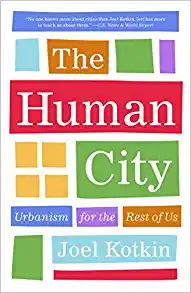
One can sometimes learn valuable ideas from seemingly irrelevant sources. Here’s something I read in the Wall Street Journal just the other day. It’s a book review by Shlomo Angel of Joel Kotkin’s Human City (Agate Publishing 2016). Here’s what he said: Kotkin “does not pretend to present himself as an even-handed expert; he presents his arguments and leaves the opposition to argue its own case. All the same and much to my delight, the book does not read as a diatribe or an anti-urban manifesto. Mr. Kotkin comes across as a relaxed confident and experienced litigator standing in front of a jury of readers making his case.”  C5 WSJ (5/21-22/16. My emphasis.) 

I might dissent on one point. I think its valuable to respond to the arguments of others. Sometimes this should be restricted to the response or reply section of an argument. In most courts, for example, an argument can be split in two–the positive presentation and the rebuttal. Nevertheless, I am inclined to believe that the same rhetorical ideas should apply to the refutation of or the responding to the arguments of the other side as apply to the rest of the presentation.  One thing for sure, anger, sneering,* contempt and rage are most often not effective.  The do not present confidence. They express the opposite, as it often true of verbal hostility.  

(*Here is something I’m not sure of. There is a difference between sneer and scorn. Sneering is always a bad idea; scorning is usually as well, but not always. Some advocates should never try it. As applies to most principles of oral rhetoric: some can do it some cannot. In my mind, manifestations of contempt come out closer to the sneer that it does to scorn.  As with almost everything, there are very narrow exceptions. Consider the lawyer from a law firm that engages in lawsuits regarding intellectual property rights that are a method of extorting money from cyber indiscreet. There is another distinction which is worth thinking about:sneering versus taunting. On very rare occasions taunting can work. The best one is where opposing counsel is an an obviously arrogant, over-strident and repulsive asshole whose properties are obvious to jurors and/or even the judge and who want to see this fellow get a comeuppance. Since women are rarely characterized as assholes, a “she” would still have to have an analogous characteristic.)

I’m not sure how often, how, or when the following can be effectively used: wit, comedy, tonal irony, analogy to fable, and the ostentatiously clever. (Hence, ponder what I say and think through for yourself. It may involve complexity and subtlety For example, what is comical taunting; when and how can it be successfully used, and so on.)  I am inclined to say wit works sometimes, ridicule hardly ever does,  except for the entire implausible, simple-minded, and plainly lying witness) and comedy will work only very seldom. 

Amusing, striking, and/or  memorable cleverness is impressive and sometimes may help an argument, but the advocate must be careful. The ostentatiously clever presentation does not impress. It looks like showing off.) I’m not sure about any of this, however. Probably most litigators are inclined against its use; it doesn’t look serious enough. After all, they say, the other side might point out that the search for justice is not a joke. 

Sometimes gently characterizing opposing counsel’s arguments ironically–even comically–might be a good idea.  For example, suppose one were arguing a zoning or similar type case where your wants to be able to build several tall buildings in the central city and you are being opposed. You might consider characterizing the argument of opposing counsel as being and address in praise of urban sprawl. 

Maybe that would help; maybe not. It takes rhetorical intuition and judgment to even semi-know.  Still, in matters this subtle, you will never have fully justified true belief. There is risk in adventuresome argumentations. 

The use of aphorisms, analogies, stories and fables are also important. Then again, all essays have to come to an end at some point, and this one is it, for now.  

*Michael Sean Quinn,

Law Office of Michael Sean Quinn AKA

Quinn and Quinn

1300 West Lynn Suite 208

Austin, TX 78703

Office Phone: 512-296-2594

Cell: 512-656-0503

Fax: 512-344-9466

Email: mquinn@msqlaw.com

Read More

LAWYER ACCUSED OF “SEX CRIME”

FLORIDA LAWYER RUNS LAUNDRY: A QUASI-COMICAL CRIME

Michael Sean Quinn*

A prominent 20+year lawyer (L) in Florida recently found himself very short of money. He and a Florida woman (W), the US Attorney charges agreed to launder money. It was a sting. FBI agents invited them to launder money form them supposedly from gambling, drug deals, and from the sale of counterfeited Viagra. 

It is not yet clear how to allocate the money to be laundered or how to allocate the fees to be paid the culprits.    L “resigned” from his firm, and the firm expressed for everyone involved, e.g., his family, though not for him.  

I confess I am curious about laundering money from a fake/phony black market Viagra business.  The stuff is not that hard to get.  The “mechanics” of the business involved checks drawn on an account of the woman’s business: Mohr2GoGifts. The press has not described L’s relationship with W. 

In any case, if you are a lawyer in need, you might want to pass on this crime, of course, among many others. It will involve doing time of course, but the national laughing will also hurt.

*Michael Sean Quinn,

Law Office of Michael Sean Quinn AKA

Quinn and Quinn

1300 West Lynn Suite 208

Austin, TX 78703

Office Phone: 512-296-2594

Cell: 512-656-0503

Fax: 512-344-9466

Email: mquinn@msqlaw.com

Read More

HAPPINESS FOR LAWYERS: Gospel According to David Whyte

DAVID WHYTE, AUTHOR: 

THE THREE MARRIAGES

Michael Sean Quinn*

David Whyte is a poet, lecturer, sometime MBA professor (at least of sorts), and other things as well. See www.davidwhyte.com. 

He has written an unusual and brilliant book entitled THE THREE MARRIAGES.  This book is not about being married three times. 

He suggests the idea of trying to balance life–something that lawyers have been taught is the route to a healthy life–is a mistake. It’s too distant, too judgmental, too lacking in immediacy, intuition, emotions of various sorts and too lacking in love. 

Whyte is not portraying or preaching Christian doctrine, but there are strains of versions of it here. He his even closer to the romanticism of Blake, say, and other poets like him, many of the Nineteenth Century. (When you hear the phrase “three marriage” put infidelity out of your mind, dispose of Mormonism, and think not of the song “Three Coins In the Fountain.”)

The metaphors Whyte uses for his view–for giving portraits of his idea of love are at least two. One of them is marriage. He suggests that life should consist of at least three marriage-like connections, sometimes over lapping: (1) a deep connection one to another and back again, e.g., a spouse, (2) a second intimate and deep connection to one’s work, and (3) a third to oneself. He then suggests that each of these marriages and the whole trinitarian group of them should be explored through what he calls conversation–a wonderful metaphor-image, if ever there was one.  Notice that this type of conversation is not discussion or argument. Consequently, Whyte leaves behind the idea of relationships built on empiricism or quasi-scientific bases. 

Here is a passage from is book. It is mostly a quote, but I have adapted it slightly so that it explicitly applies to lawyers.  It is to be found on his pp. 80-81.

A real work, like a real love, takes not only passion but a certain daily, obsessive, tenacious, illogical form of insanity to keep it alive.  Once you have experienced the real essence at the beginning of the affair with a work, the task, as in a marriage, is to keep the work, the company [or the firm], the initial image with which we fell in love, alive. We want to be surprised again and again by where our work takes us and what kind of person we are becoming as we follow it. Like a love, or a sense of ourselves, we can nibble and negotiate at the edges but the central core of the relationship is actually nonnegotiable. A real work cannot be balanced with a marriage in a strategic was, a little it on that side, a little bit on the other; it can only be put in conversation that marriage, as an equal partner. [Notice that argument and the rationality that goes with it is not part of the package. msq] All the strategies for making them work together will come from understanding that central conversation. And what is that conversation? What is the thing called the self that drives home from a work and walks through the door into a relationship? Who is it that goes out the door in the morning and leaves a loved one, a husband, a wife, a daughter, a home behind and looks to the new future in the day? 

* * * * * * * * * * * * * * * * * * * * * * * * * * * * * * * * * * * *

Now one may wonder whether one’s self has a central core and one changes and evolves only by nibbling at the ends. The only solution for dealing with question is to begin by having a conversation with the book itself. 

*Michael Sean Quinn,

Law Office of Michael Sean Quinn AKA

Quinn and Quinn

1300 West Lynn Suite 208

Austin, TX 78703

Office Phone: 512-296-2594

Cell: 512-656-0503

Fax: 512-344-9466

Email: mquinn@msqlaw.com

Read More

Quinn Quotes

General assertions are like that. Even specific assertions can be like that–situations change.  There is truth in the idea that one cannot look into the same brook twice.  Of course, that idea is ambiguous.~Michael Sean Quinn, PhD, JD, CPCU, Etc.Tweet

The books shown are NOT affiliate links.
MSQ (site) does not receive any compensation for books listed or sold.
Books are shown for the reader's convenience only.

Newsletter

Michael Sean Quinn, PhD, JD, CPCU, Etc*., is available as an expert witness in insurance disputes and other litigation matters. Contact