

DOG INSURANCE:  THREE BITES, WHICH COVERED?

AN ABSTRACT DISCUSSION

This post is are thoughts on coverage in the abstract. Another post will be about some concrete sides of these oddball coverages.

Suppose the large dog, Ruffian, belonging to A bit B three times in A’s front yard, where A and B were having a hostile but peaceful conversation. In other words, the two disagreed and argued their cases.

Here are the three bites; they all take place within about 3 minutes of each other.

(1) A is not paying attention and for some reason, say, as B wags his finger at A, Ruffian leaps up and bits B on his wrist.  Mind you this is a firm bite. B injured; skin broke; the arm bled; nerve was more than just touched.  A is obviously negligent.

(2) B is pissed and begins shouting, and A is also upset all the way around. However, A reaches out and pushes B, while yelling at B, “Makes friends with Ruffian ‘Asshole’ and do it quickly. Reach out and pet him, and do it now, Buttwipe.” Shouting continues, and A does not reach for Ruffian to get him under control, even though A knows that this sort of thing has happened at least twice before. Same arm bitten; further up it; nerve damage more severe.  Assume that A is thereby reckless.

(3a) Shouting goes up and continues. B takes a step toward A, though without fists clenched or up, and A says to his dog, “Ruffian, get him.” A does not know full well that Ruff will leap and bite. Still, he exactly directs an event that hurting B pretty badly further up the same arm; same nerve system; dog’s head shook and twisted; a good deal of blood spilled this time. This is clearly a deliberate act.

(3b) A knows full-well that Ruff will do as he is commanded and do so vigorously, aka ruffly.So, what’s covered and what’s not? (1) Obviously covered. (2) Probably covered, except for punitive-exemplary damages.

(3a) Deliberate act by A and hence not covered at all, probably. (3b) Certainly not covered. Keep in mind, however, that these three bites are all part of the same event and that it is mind-numbing–or at least counter-intuitive–to say that they are separate occurrences. Also, keep in mind that B’s ultimate injuries get worse from the separate bites, but it is at least virtually impossible to divide them up.

Read More

CURRENT INSURANCE LAWYERING

SOME CURRENTS

Insurance law and practice hasn’t changed much in the last couple of decades. In part that is because insurance law itself is in the doldrums. Doctrinal stagnation has been inflicted upon the practice inflicted upon the community of coverage. Some have always regarded  the practice of insurance law as old fashioned and boring. To some extent, however, things are changing.

So what’s new? There are a number of currents affecting practice. There are several mild currents; some are subtle expressions of change. Not everyone sees these mild changes or fully grasps their significance.  I will discuss major changes in another essay. For this essay I will use events and trends in Texas a potentially suggestive paradigm of what’s going on all over the country. Major and revolutionary changes will be discussed in another essay.

First current: Texas insurance lawyers, as well as other states, now have specialized professional firms representing policy-holders. Some of these are larger firms representing larger clients in lots of area; some are tiny, so-called boutique firms represent clients both large and small in special areas; some are specialized departments in mega-firms, and so forth. The rise of the policyholder firm is one of the most significant developments of the last 30 years (plus a few more, maybe). Anderson Kill, perhaps the first of the bunch, was created in 1969. It has been without question the best at self-promotion.

In fact, the surge of such firms is certainly one of the most interesting developments of our era so far.  For one thing, it has increased the quality of performance. Now its specialist against specialist; the learned against the learned. Complexities and subtleties are known and appreciated across the board. It’s not just large specialty firms that are part of this trend. Many large commercial firms now have insurance departments. This trend is growing. One large, well known Texas firm within the last year created an insurance department and hired a virtually famous coverage lawyer to become its first member. These types of firms almost uniformly represent business policyholders against insurers. Of course, this development is not restricted to Texas.

Second, source of change: another current in Texas practice, I think, has been the UT-CLE on Insurance Law, already mentioned, which began to develop around 20+ years ago. In the last few years the Insurance Section and UT-Law-CLE have cooperated in putting together and producing the programs to great effect.  The same sort of thing is surely available for the ABA and perhaps other state bar associations.

Third change: auditorium CLEs are no longer the only educational sources dished out by insurance lawyers to themselves, other lawyers, and to some of their clients. There are also original online CLEs; formerly live CLEs are re-offered online; there are webinars, and law firms put on their own courses available to their customers and clients, but therefore also often made available also to lawyers. Online, there are all sorts of short publications (blogs) regarding cases, statutes, rules, philosophy, techniques, and more.   Often they present how-to tips to other lawyers and/or “civilians.” The truth is, I learn much from them about the many things of which I know nothing or little, and/or have rather thin and/or faulty knowledge.   Excellent examples of these sorts of publications are those on the Deep Water Horizon cases put out by Haynes and Boone and by several other law firms. A great many more law firms are now involved producing blogs, often called “Alerts,” on a variety of insurance law topics, often among others.  By mid-2020 there were all sorts of ZOOM-type way to do CLE. During much of 2020, auditorium CLEs were canceled and became ZOOM CLE’s.

Fourth, in Texas, we now have “The Insurance Section of the State Bar of Texas,” and other states are developing similar new specializations, thougth4e ABA has not. Participatory activity in it has spread rapidly across both sides, as it were, of the central aisle.  All of this might strike one as the natural evolution of the practice—simply a routine economic cycling of the organization of the lawyer-insurance joint industry. But that’s not how it happened, and it’s not how it continues to happen.  (Keep in mind that insurance companies are probably sued more than any other set of organized companies and that they are involved in lawsuits at a rate several times that size.)

The section has made “insurance law workers,” as a Marxist observer might put it, much more of a learned, interactive, friendly, politely argumentative, “discussion-ing” (or “dialogic”), somehow and to some extent, unified  bunch, and that has been, is and will continue to be exciting.  Judges love to come and talk at our CLEs, more than they do others, I’ve heard, and I even witnessed and illustrative event once. The Section has a quarterly journal with plenty to publish; delivery is now available online; and—perhaps most interestingly–it has a digital archive of all sorts of interesting writings.  People active in the section love it, and rightly so! This very CLE program illustrates my point nicely. These phenomena not true only in Texas, though, I’m sure Texas has done it best.

This CLE also illustrates a fifth point, and that is the extent to which the necessary use of insurance law (and therefore the practice of insurance law) has become a genuinely diverse and pervasive specialty for a whole variety of professionals. Over the last 15 years or so, the practice of insurance law now permeates virtually all other areas of the law. Where here is risk—where there are perils—there is insurance. Where lawyering is afoot, insurance is always nearby–sometimes clearly perceivable, sometimes in the bushes. Virtually all large business deals, for example, mergers or/and acquisitions, whether purely domestic or international, have complex insurance components, and they are more and more being turned over to what I’m calling specialists in insurance contracts and their provisions.  Virtually all large companies have insurance lawyers in their General Counsel Office, and it amazing how many lawyer are to be found in specialty departments of large insurance brokerage houses and accounting firms.

Seventh, one of the most interesting purely intellectual events of the last couple of decades is the developing drafts of the RESTATEMENT (THIRD) OF THE LAW OF LIABILITY INSURANCE. This has certainly been an important process, and its official publication will be a significant event. The American Law Institute, its organizer, sustainer and eventual publisher describes it as a “Restatement [that] covers the law of contracts in the liability insurance context, liability insurance coverage, and the management of insured liabilities.”[1] Interesting, but not much used yet, and no revolution to be found here, even upon publication. It will certainly not trigger the shock in the legal system that happened with the RESTATEMENT (SECOND) OF THE LAW OF TORTS.[2]  (There is no “FIRST.” Talk about bad ideas. “Here is the second of the first book. It is not a revision of anything, since there was no first edition.” Very strangely, the ALI brackets “First,” “Second” and “Third” by dates and not by edition number. )

On the surface, then, it appears that not much new that is striking and hugely transformative has happened or is happening. Or so it might seem. Of course, there are “old-time” cases grinding along; this will go on forever, or so long as there a people in conflict.  The apparently increasing number of huge storms with origins at sea and hail damages starting in many places both seem to be increasing first party, tangible property insurance work. Most of these cases are relatively small; in contrast, controversies arising out of Sandy were keeping some Eastern seaboard coverage lawyers working well over full time, plus a few from elsewhere.  Insurers are taking lots more legal work in-house and that seems to be having an impact on the business side of the profession. Serious insurer bad faith cases appear to be dropping. The number of new, large companies—some coming from mergers, takeovers, and the like–are impacting the work of some sophisticated coverage lawyers, mostly at large firms. And demands by insurers for appraisals is diminishing must coverage work.

I am not suggesting that there are not marvelous, older-type complex cases flowing down the pipeline and there are truly excellent opinions being written.[3] A number will be studied in the next generation of law school case books. A number of the opinions are masterful and some are quite subtle.[4] And a few are now famous, such as In re Deepwater Horizon,[5] together with a string of related cases. Alas, fame seldom lasts.

A big difference is emerging in complex, big-to-huge old-time coverage and that is the emergence of e-discovery where there are piles upon piles of electronically stored information.

The aging of some (a big sum) of the legal profession is noticeable. Experienced coverage advocates turn gray, though—one would like to believe—slower than most others.  I’m not sure what the effect of this generational change will be over the short run-a decade or so.  Over the long run, it will have no impact whatever, except that the names of some law firms might change a little.

=========[1] Drafts of versions of parts of it can easily be found on the Internet. Use “Restatement of the Law: Liability Insurance.”[2] Not even it shocked the legal world quickly. Part of the problems is that lawyer are largely uninterested in reading and studying restatements of the law in general.  This has been a professional mistake. The ALI has been publishing Restatements since the 1920s and they are marvelous learning tools, and in a few cases transformative tools.  I have never understood why lawyers don’t love them. Nothing provides better systematic orientation that a relevant restatement.[3] U.S.Metal, Inc. v. Liberty Mutual Group, #14-0753 (Tex. December 4, 2015)(CGL coverage).[4] AIG Speciality Ins. Co. v. Tesoro, #15-50953 (5th Cir. October 17, 2016)(discovery rule).[5] In re Deepwater Horizon, #13-0770 (Tex. 2015)(oil spill and additional insured)

Read More

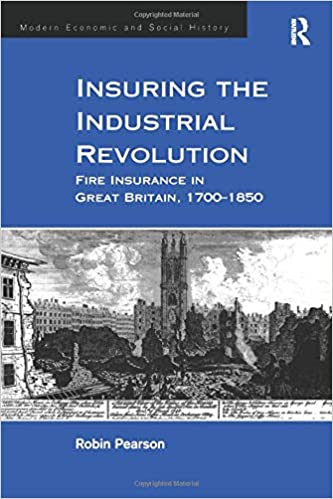
Fire Insurance History

INSURANCE HISTORY FIRE INSURANCE SUN FIRE-OFFICE (1710)

Sun Fire-Office (“SFO”) is the longest-lasting British insurance company. It started with fire insurance shortly after the 1600s, and part of its beginning was taking over some other companies. A document related to fire insurance, a Salvage Agreement, has already been discussed in a different post. This post is an exposition of one of its early policies. Like at least most other policies of the time, it is short but longer than many. It consists of 16 articles. Not all will be discussed here. One of the most interesting passages in Art. XI.  Some of this blog entry involves quotes from the policy; some are summaries; some are simply my indications.

Art. I.  List of the sort of people who can take out (buy) a Policy. The policy must be signed by 3 members of SFO, and sealed indicating its first quarter of coverage. The applicant purchaser must pay the Stamp Duty. What was covered, it looks like, was fire losses or damage to his or her house and personal effects therein and/or to various commercial items under in that house or another one roof elsewhere. Those commercial items included movable goods, merchandize, wares, and furniture. Their recovery was those items being repaired and made good to him or her by SFO.

Art III. Each policyholder shall receive a “book” entitled The Historical Register. If the policyholder lives within a given area, it shall be provided directly. If not, it will be delivered to a person designated by the policyholder who does live within that district. [MQ: Looks like this is a commercial newspaper, maybe.]

Art. IV. If a person insured both house and commercial goods, he or she must have two separate policies.

Art. V. What is included in coverage? “all merchandizes, Wares, Household Goods, Furniture, etc., excepting Money, Plate, Jewels, Pictures, China Wares, Tallies and Writings.” [Exceptions not Exclusions—MQ guess: same. Tallies = copies of bills and receipts? Writings?

Art VI. Accumulation of reserve funds to cover claims of all “suffers.”

Art VI. Added fee deducted from claim payment for financing whole payment for all covered losses.

Art VII. If a person is insured by SFO and another office and he/she has coverage from SFO and the other firm, s/he will not be liable for additional SFO fees as required under Art VI. [meaning not clear].

Art. VIII. If moneys reserved under Art VI and VII not used for losses during a specified period, it will be distributed to all “Sufferers,” in proportion to their covered loss paid.   Plus other considerations.

Art. IX.  Notice to insurer of fire loss shall be “as soon as” the loss or damage has occurred.“[W]ithin 10 days after every Quarter day, there will be a General Court” held at the said Office, when all Claims and Losses by fire  will be always faithfully paid, according to the Tenor of these Proposals.”

Art. X. Other possible additional claims handling fees.

Art.XI. [MQ:  Complicated claim and claim-handling process] Every Sufferer must make out his or her Loss and damage on Oath before a Judge or Master in Chancery, in the presence of the Clerk of the Company within 10 days after the fire, and carry that affidavit to the Minister or Churchwarden of the parish in which the Fire broke out and some other eminent Housekeepers in the said parish, especially such as live near the place where the fire began but themselves have sustained no damage thereby, and are best acquainted with the person, reputation and circumstances of the said Sufferer, who shall sign a certificate that they know or believe nothing to the contrary, but that the Sufferer has really and by misfortune lost by fire the sum mentioned in his or her Affidavit, upon producing which to the Company he or she will receive his or her claim. But if there appears any fraud or perjury in such Sufferer he or she shall be excluded from any right in these proposals.

Act XII. If an insured “moves,” as we now call it, the policy, upon notice to SFO, will go with him/her.

Art XIII.  Time premiums (“Quarteridge”) are due: 10 days after every Quarter-Day. Lateness may lead to forfeiture.

Art. XIV. Receipts provided insured for premium payment.

Art XV. If the policyholder dies, the policy goes to the executor, if premiums paid.

Art. XVI. Repricing of premium if “book” not wanted.

Read More

LAWYER PERSONALTIES AND THE “BIG SWINGING DICK”?

                         LAWYER EXCELLENCE AND MOSAICS OF REACTIONSSome successful traders on stock markets are described as having “big swinging dicks.” Oddly enough this has “extended out,” as it were, to include very successful female traders.  The phrase is reported by Michael Lewis on Wall Street trading. It has seemed to me that the same “title” is claimed by–and applicable to–certain classes of successful lawyers. In her book on poker, Maria Konnikova, suggests that the image metaphorically instantiates those who pridefully use the image are manifesting their unawareness of and cannot admit the degree to which chance is an element both in life and in complex games. I wonder if the same isn’t true for lawyers. 

Read More

“Salvage Agreement” Insurer <> Insured (1708)

 Back by popular demand: Eighteenth-Century Property Insurance: Salvage  AgreementIn 1708 Charles Povey,* the founder of The Sun Fire Office, by far the most successful insurer in the 18th Century and alive to this day, more or less, devised a new insurance-related contract–or new part of the insurance contract, an endorsement of sorts–which was an innovation designed to help both the insurer and the insured. (*In those days, Charles was often called a “schemer,” among other things, and his ideas were frequently called “schemes.” One must keep in mind that these terms had a different meaning then than what they mean now. Then the term “scheme” simply referred to an idea for a business project It did not necessarily have a negative connotation as does today.)In any case, his idea was a “salvage” contract, agreement, endorsement, or privilege for insureds under a certain insurance policy. I currently believe that the insurance policy was or became that The Sun Insurance Office. (As nearly as I can make out so far, an “Insurance Office” might be an insurance company, or maybe an insurance intermediary, or both.  My hypothesis is that formal distinctions were not made, so that an “Office” was an insurer but that it had men around-and-ab0ut who were salespersons or consultants to potential insureds of some sort. Later in the century major insurance “Offices” hired persons to be agents, and they were actually called that. Here is the title or name of what I am calling a contract: It is something all subscribers to Povey’s Proposals for Insuring Movable Goods, Merchandizes and Wares from Loss and Dammage* by Fire. [*Spelled here correctly.]The word “salvage” did not then have a meaning identical to the one we know and use. For this agreement “salvage” meant trying to put out or restrict the fire and remove as many of the goods, etc. as can be done by a team. The team would also try to protect the good, etc. from being stolen by thieves. The “Proposal”  document suggests that thief-losses were as large as or larger than fire losses. (Not long after the turn of the 18th Century, private brigades of firemen became more involved, and they could be restricted to certain groups of insureds, just as salvage-teams were.Several fire insurance policies I have reviewed from late 17th Century England appear to the modern to be policies for dwelling. Reading this document suggests to me that some dwelling policies were actually for buildings where people both lived and did business. Those structures were–or would have been–called “houses.” I have preliminarily and tentatively concluded that the word “house” was more broadly conceived than it usually is today, even though in our day, some people work out of their houses. In some later 18th Century first policies, the distinction between “houses” and “other buildings” is made more clear. What was true about those earlier policies is that they appeared to cover only the building and not its contents. The kinds of policies presupposed by the Salvage Agreement were obviously commercial, at least in part, although the buildings were called “houses, and maybe some people lived there.” (In that era as in some closer to our time, it was common for some merchants to live on an upper floor or floors.  There is no suggestion that personal items–the owner’s clothes, for example–were covered in the earlier policies homeowner-type policies, or in the ones to which this Proposal was tied. These differences became explicit as the century begins to age. The logistics of the salvage agreement were that a mark of the insurer, a sun, would be “nailed up against their houses.” I would have the policy number so that it would be easily identified. However, if an insured failed to make his quarterly premium, the mark would be removed, and the service terminated. I infer–or guess– that the buildings were probably mostly wooden. How else could the insigna be “nailed” to the building?According to the proposal, each of the salvage-men (aka “Exchange House” men) would be trained somehow and recommended by ministers or wardens from the appropriate parish or six reliable housekeepers from the neighborhood. Each of these Exchange House Men would carry a box in which their “certificates,” printed on parchment, would be kept and displayed.The Agreement contains a paragraph setting forth a number of advantages for insureds and the public interest. Four of the five  are commonsensical but one of them–the fifth–is particularly interesting:“It will be of singular advantage to all merchants, wholesale dealers and others who have great stocks of cumbersom and combustible goods; because by the means of such, a timely assistance, all, or the most part, may be sav’d; whereas otherwise two or three thousand pounds worth or more of merchandizes and wares may be lost or consumed by the flames.”In some ways, this agreement is a supplementary agreement connected to a particular policy that extends coverage in new directions. It is also part of the insurance policy’s claims manual. It handles some things by private contract which are now done by public entities: police protection and something like licensing of something like claims persons.  The text of the document discussed here is to be found in David Jenkins and Takau Yoneyama, HISTORY OF INSURANCE, VOLUME 1, Fire (London: Pickering & Chatto 2000) 123-24.P.S. Salvage has played an important role in maritime (marine) insurance. There is a whole body of law as to who pays for what and why. It is not identical to the use of the term in other parts of insurance, and certainly not 18th Century fire policies or what are akins to endorsements

Read More

Quinn Quotes

Asserting a proposition one believes in a certain situation and asserting its opposition in a substantively different situation, is not necessarily inconsistent. Neither one, taken alone or together, entails advocacy.~Michael Sean Quinn, PhD, JD, CPCU, Etc.Tweet

The books shown are NOT affiliate links.
MSQ (site) does not receive any compensation for books listed or sold.
Books are shown for the reader's convenience only.

Newsletter

Michael Sean Quinn, PhD, JD, CPCU, Etc*., is available as an expert witness in insurance disputes and other litigation matters. Contact