
CYBER INSURANCE SUPPOSED: “Real World Insurance”

THE “REAL WORLD” v. THE “CYBER WORLD”

Michael
Sean Quinn, Ph.D, J.D., Etc.

1300 West Lynn #208

Austin,
Texas 78703

(o)
512-296-2594

(c)
512-656-0503
www.michaelseanquinn.com

mquinn@msqlaw.com

I have been warning readers for some time, that insures of the so-called “REAL WORLD” would begin excluding losses from the So-Called “Cyber World.”  (I have also said a number of times that there are no standardized cyber insurance policies. The latter is a slight exaggeration on my part.)

Here is an example of a new cyber exclusion; it is found in an endorsement; and it is entitled “Cyber Risk Exclusion.” It comes from a form marked “USFire 000015” and marked FM 600.0 191 08 05.  The origin of the first of these two, but the second is less self-explained. The initials have over many years meant “Factory Mutual,” but there is not reason to think that is true here.

Substance

In any case, the endorsement says it applies to a number of named policies.  The list is restricted to cyber risks to the extent that they are found in the following parts of commerce policies: Boiler and Machinery Insurance*, plus the following parts** of other commercial policies: Crime, Inland Marine, Property. (*First “Footnote”: Boiler and Machinery policies are not explicitly named as a type of commercial policy, but they all are, as they have always been.)  (**Another “Footnote”: The meaning of the word “part” is not clear.  If a policy is completely devoted to one risk, say crime, so it is a “Crime Policy” and nothing else, does the cyber loss exclusion being discussed here apply to such policies? But there must be a cyber exclusion for that situation, although it might be a section in the policy itself and not in an endorsement.  There would be no confusion if the exclusion applied to all the insuring agreements, and anything else that might be relevant.)

There is one exclusion with three sub-parts. The key to the exclusion is this: “The Company will not pay for Damage or Consequential loss directly or indirectly caused by, consisting of, or arising from [any of the following three:” [Emphasis added.]
1. “Any functioning or malfunctioning of the internet or similar facility [i.e.,  any other net],
2. “Any corruption, destruction, distortion, erasure or other loss or damage to data, software, or any kind of programming or instruction set.
3. “Loss of use or functionality[,] whether partial or entire[,] of data, coding, program, software, any computer system or any device dependent upon any microchip or embedded logic, and any ensuing liability or failure of the insured to conduct business.” [Emphasis added.]

There is another exclusion which does not identify itself as such, be that is what it is.  [Here it is in abbreviated part.]: All Damage [as defined in the policy] or Consequential [as defined in the policy] loss are “excluded, regardless of any other cause that contributes concurrently or in any other sequence.” [Emphasis added.]

At the same time, reads the endorsement, the usual perils to be found in physical injury to first party property policies–or most of them, anyway–are not excluded.  [I say first party property policies, but maybe not for at least a couple of areas.]

As with all endorsements of this type–exclusionary endorsements–this one states that it does expand coverage in any way.  The meaning(s) of all other “terms, conditions and exclusions of the policy are unchanged.”  In other words, none of them is altered in meaning.

Comment

More than one comment are quite possible, but only one shall be set out here. The disjunction of “direct or indirect” is very obscure. (a) Does the word “direct” mean that the cause is a significant part of a group of direct causes? (b) Might the word “direct” exclude coverage if one of the causes  is anywhere in a causal change, except the last link in the causal chain? (c) Or does the idea of direct require that the excluded cause be the only–the one and only–cause of the Damage?

Alternative (a) is reasonable, the other two are not.  Consider the following descriptions. (i) Quinn is playing pool.  He uses the all white q-ball to strike the 4-ball.  Is this direct?  It surely is within the game of pool, but it is part of a causal chain: Quinn looking, Quinn studying; Quinn deciding; Quinn striking the cue ball.  Now consider Quinn striking the 4-ball by first striking the 2-ball. Granted the second set of facts is less direct than hitting it first.  Within the game of pool this sequence seems direct, as does striking one or more sides, when contrasted with outside acts, for example, throwing the cue ball at the 4-ball, using either end of a tennis racket or throwing it at a wall, the ceiling, or another player, and then hitting the 4-ball.  In other words, being direct varies with the context.

In addition, complex events are virtually never caused by simple events. Thus, if “direct” means “only,” there are no direct causes. In addition, if Damage is caused both by the corruption of data and the distortion of software at the same time then the exclusion would not be triggered, since it–that combination– is not separately in the list of exclusions it is not excluded.  Correct thought this view as a matter of semantics and logic, one wonders if pragmatic and practice orient courts will buy it.  So much for the literal interpretation of contracts. 

When a lawyer is thinking about coverage in “direct result of” contexts, or similar wordings, s/he should be thinking of different ways to describe context, actions, omissions, and events.  

Read More
CLE: A Lesson Regarding Presentation–Errors–Part II

Valuable Errors

Michael Sean Quinn, Ph.D, J.D., Etc.

2630 Exposition Blvd  #115

Austin, Texas 78703

(o) 512-296-2594

(c) 512-656-0503

mquinn@msqlaw.com

This is a blog-essay regarding CLE matters. Part I was about conceptions, some how to/s, some what not/s, and a few whys. At the end of that essay I promised stories of two of my errors. This one involved an error as to design of the presentation and a difficulty that beset me as I tried rapidly to deal with a disaster caused by disingenuous conduct.  Part of the story is descriptive and part of it is a variation on being description, to wit, it is quasi-fiction.  The essay works this way to protect the guilty and me from the guilty–a litigious person, if ever there was more than one. I shall start with a paragraph about background.

In any case it will take a little while to get to the story.

I give lectures at CLE programs and some others on two general topics: insurance matters and legal ethics matters.  Both of these are broad topics, but the second is broad in a special way, viz,  the Bar counts legal malpractice, similar civilly actionable lawyer foul ups, and even lawyer crime committed as lawyers as realms of legal ethics.  Lawyers who commit many sort of crimes while not being lawyers are probably violating relevant ethical principles upon which the conduct of lawyers can be judged ordinary and even philosophical ethics also fit into the category of legal ethics, as does jurisprudence.  In addition, “ordinary” ethical principles just by themselves can help examine the ethics of lawyer conduct.  So much for theory. I will come back to it.

It must be kept in mind that lots of legal ethics is quite boring from the point of view of what to read and what to hear about.  At least some of the disciplinary or professional rules are quite idealistic; others are quite obvious; a few are more than a shade unclear.  As every one knows, there are not separate causes of action for violating ethical professional conduct rules.  At the same time, it must be kept in mind that violations of those rules can be used as evidence in cases regarding other, more loosely conceived, ethics matters, to wit, malpractice, for example.  What is most boring about lecturing on or reading about rules of professional ethics is that they are usually obviously linked to a known written and established professional rule and there are only a few categories that produce disciplinary violations.  These are such things as stealing the client’s money, running a Ponzi scheme, representing parties with contrary interests somewhere close in both topics and tied to a given case, “screwing over” a law partner, having sex with a client who is unbalanced (or at all in some jurisdictions), and a few “so forth/s.”

There was a CLE once where I was appointed to provide a whole 45 minute presentation on ethical matters in order for those attending the conference to get most of their ethics studies required by the supreme court out of their way.  I had decided to begin with 10 minutes or so on the ways various parts of legal ethics fit together.  I was then going to present a discussion of a recent–that year–very important supreme court decision from another jurisdiction, but one that was sure to make ABA-type headlines, such as they are,  and one that was sure to have a high impact everywhere, whether explicitly or otherwise.  That case was going to be the centerpiece of the next piece of the presentation–15 minutes or so–after the first 10 minutes or so. As is often done, the case to be discussed was to be attached to the CLE essay that was to be inserted into the CLE-binder.

I had a very close friend (“Friend” who was also a lawyer.)  He asked me to help his then lover–also a lawyer–to start a climb of the CLE speaker level.  Of course, given the status of my friend, I agreed to help them both out.  I shall call the man who was his lover, Lover.

I often help friend. Still, I am occasionally gullible. In this case, I did not check Lover out.  (I’m not sure it would have done any good, since Friend recommended him and I would have taken Friend’s word for it.)
In any case, I divided up the presentation with Lover half and half.  I had obtained Committee approval for the topic, and I did a good deal of the planning, although I included Lover some.  He looked for cases.

I divided up the topics, made the decisions as to who would do what, and verbally outlined what the whole presentation would look like.  All this was done with Lover’s apparent involvement.  Following all this, I sent Lover a very brief email on the really important topics and divided them up again, just as I had before, this time ever-so briefly.

Out of love for my friend, and at his request, I suggested that Lover go first.  We both thought that would get more attention from the audience than if I took the first start.  The organizational plan changed.  The pure ethics section would be transferred to the end; he would explicate the case, after having given a short “This case is important for the whole country and hence in this jurisdiction” in  2 minutes or less, and then go on to an explication of the case.  I was then to link up the case to other sources, such as two different whole books of the RESTATEMENT and then set out a major criticism of the case that had several dimensions. Finally, the presentation was to end with 10 minutes on pure legal ethics.

The whole event was a complete disaster.  Lover started with 5 minutes on legal ethics, turned to the case, briefly set forth what he took to mean the essence of the case, argued that the case would not fit into our jurisdiction, and denounced the legal decision-making practice in the case’s jurisdiction of origin. The time allocations were to be equal (22.5 minutes more or less) and time devoted to various subparts were specified in advance.

He got almost everything wrong to some degree or other. He never looked up, read the lecture from a script, and spoke in a very soft monotone, with a slight British accent that I had never heard before. In addition, everything went to fast. His 5 minutes on legal ethics focused on the wrong principle and entirely neglected to provide in passing what the Comments said.  He entirely ignored the facts and reasoning of the case, set it forth as a highly abstract rule he created, and then  treated the soundness of the case by a lengthy discussion of a complex hypothetical.  Lover took 33 minutes.

As I realized that was happening, I became angry first, snuffed it out, since the show must go on.  I then quasi-panicked (“My god, what the f–k will I do.”)  I then turned to wondering how I could fix the situation.  I concluded that I could not fix it but might be able to lessen the catastrophe. And so I did.

“I want to mention Lover’s involvement in setting up the the presentation’s organization and for the lecture he just gave. Plainly, he had agreed to what might be the most important part of it. I should also mention how important it is to put that kind of assignment in the right perspective, and he certainly addressed the central part of the topic.  I’m sure we all agree that reflecting on his complex hypo will reveal important results that we all need to grasp.”

“For my part, I will focus on how some of the objections may conceive or misconceive both the facts set forth there and  the court’s reasoning.  We may have assigned ourselves too much material to cover in a single 45″ slot, so please remember to read the X v Y case attached and see for yourselves how far off the mark it really is.”

All this took less than 2 minutes.  I then gave a detailed exposition of the case. I asserted that this decision had an uncertain future but that some scholars and some practitioners think that X v. Y may revolutionize a piece of the law, over time. Of course, I said, “they may be quite wrong, even about the essence of the case.” Therefore, I finished, “you must pay careful attention to Lover’s account of the matter since he may be quite right.”

That’s it. The presentation was over. The last act was over. Audience reaction was flat. Out of the audience, however, came a picture. Out of a cloudy day time sky (not a night sky), came a picture Pegasus hurling downward at a steep angle. The horse was pictured jet black, wings and all.  There were two riders, one in front of the other, the rider in the rear hanging on, for dear life to the man in the front, who had a  bright red beard. Obviously, the man in the rear was much better dressed than the man in the front.

I was so intrigued by this picture that I had it shown on the screen, over the objection of the chair person. The showing of the picture produced no reaction.  However, both he and I got low scores on the evaluation forms.

Friend broke up with Lover a week or two later.  I have never asked why, but I have a fantasy I prefer.

*******************************************************************************

QUESTIONS

And what mistakes did I make?

How many mistakes did I make?

For each of my errors, what were the reason(s) for it being made?

Read More

Lawyer How-To: “Are you certain about that?” (Sketch II)

I wrote about this topic one time before.  It was entitled Sketch I

*******************************************************************************
“Are you certain?” is a trap question. (1) If you say “Yes” and you are wrong about what you say to any degree or in any way, including any detail, you run the danger of being impeached.(2) If you say “Yes” and you are right and non-impeachable, you may be accused of being arrogant and not really in tune with the natural world. (3) If you say “No” you will be impeached for a lack of certainty. You will be portrayed as someone who is not to be believed–or not much in any case. You will be made to look like a truth-mumbler or a coward when it comes to evidence.  Such people are not convincing, it will be said.

Part 1.  I have been asked that question repeatedly in depositions as an expert witness.  I have an approach that works for expert witness and fact witnesses as well.  Here are some variations on the same idea.

W. S/he asserts proposition p. [I take the notation over from “Baby Logic” taught in all Universities that are above the C- grade.]
L. Are you certain?
W. About what?
L. What you just said, p?
W. What do you mean by “certain”?
L. Do you really not understand the term “certain”? [W should stick to his “guns.”]
W. Actually, when it is used by itself, I do not.
L. What do you mean by “certain”?  [W can make his/her move here.]
W. There are three senses of the term “certain.” Thus, I can’t answer yous question.
L. Tell me about them.
W. The correct and full answer is lengthy. Are you sure you want to hear the whole thing?
L. I asked the question. Now it is your duty to answer it.
W. The word “certain” is ambiguous. Here are its two distinct senses. (1) The most important one refers to propositions. A proposition is certain only if it cannot be false. Typical sentences look like this: (i) “It is certain that this even took place.” (ii) “It is certain that I am a male.” (iii) “It is certain that the Empire State building will not tip over.”  All or virtually all propositions–or out-and-out all of those–about the empirical or material world are like that. (2) The word “certain” can have a mental meaning.  Here it would mean being absolutely convinced that a proposition is true.  Of course if a proposition is not itself certain, it is probably not rational to be certain that it is true.  One would be certain about what is not certain.  Here is an example: “I saw auto A crash into auto B, I think, and I am reasonably sure that’s what I saw, but I am not 100% certain. Nobody can be than sure about anything.” [Notice that the psychological sense of being certain or of mental certainty is very close to the the term “sure,” and its semantic relatives.]
L. Thank you, but now that the disquisition is over, are you certain?
W. About what?
L. About the first question I asked you?
W. Which was?  [L may make a mistake here, but never mind.  Do not do the whole discussion.]
L. Are you certain about what you said. In other words, “Are you certain that p is true? [Now comes the coup de gra or the disaster.]
W. Since it is not a certain truth–a proposition that cannot be false–of course I am not certain about it. No rational person can be. If one is certain about that which may be false, then one does not understand the empirical world.

Two points here.  First, do not make the dialogue as long and abstract as I just did. Take the essentials and abbreviate. Second, practice doing it. Third, don’t start any sentence with “I am not certain. . . .” That will give L a way to object  by saying, “Object to the answer to the extent it goes beyond the question.” You want to avoid that. Hence, always start with the explanation about why you are not certain.  “Since X, Y, Z are true, neither I nor anyone else can be certain.”

Part 2.  I have repeatedly been asked in this context the following: :

L: Do you have the same degree of certainty to be at the same level as what is required of a jury?

My answer is always something like this:

Q=W. My view is well above the level of more probable than not.

L: You didn’t answer my question, please do so.

W=Q. I think I just did that.  Jury verdicts must be supported by the preponderance of the evidence. Obviously, I cannot provide a jury decision or say what the jury ought to decide. My view of the probability of my opinion, unquestionably supports a jury verdict, if I have asked the right question.

Part 2. Now, here is a question that is more interesting. Of that I am (most, quite, very) confident.

L. With regard to X, what is your view (or, What do you think happened? What happened? What did you see, & so forth?)
W. p  [Meaning, p is what is true.]
L. [Are you confident that what you just said is true?]  What is neat about the word “confident” is that it does not carry the paradox built into “certain,” and it does not have the fixed character that may go with “I am sure,” which has an absoluteness built into it.  In contract, the term “confident” carries with it a certain range of possibilities, and it seems more closely connected to the mind of the speaker; it has a certain connected-ness to the pragmatic nature of the world together with the pervasive presence of some–at least a little–subjectivity.  And it does all this without particularly making the idea torpedo-able just because of the use of a short word.

Never use the phrase “absolutely confident.” Of that proposition, I am rather confident, in at least most salutations.

Michael Sean Quinn, Ph.D, J.D., Etc.*

1300 West Lynn Suite 208

Austin, Texas 78703

(o) 512-296-2594

(c) 512-656-0503

mquinn@msqlaw.com
*Resume: www.michaelseanquinn.com

Read More

CLEs: Lessons Regarding Lectures and Programs–Part I

Michael Sean Quinn, Ph.D, J.D., Etc.*

1300 West Lynn Suite 208

Austin, Texas 78703

(o) 512-296-2594

(c) 512-656-0503

mquinn@msqlaw.com
*Resume: www.michaelseanquinn.com

I have been giving CLE lectures almost regularly for 15 years, or so. Generally speaking, there are three ways to present them. (1) Most often they are summaries of decisions occurring during the last year or so. In this category, (a) “governing” cases from supreme courts are mentioned, with a few words said about the central ideas, (b) several relatively recent decisions of the federal circuit courts where the locale of the CLE state is within its jurisdiction, and then (c) most of the rest come from lawyer court decisions.

Within the (c) category there are two subparts, (c)(i) and (c)(ii).  Category (c)(i) contains decisions from district courts; these are almost always federal district courts, although there are a few states where some opinions of district courts are reported.  Category (c)(ii) consists of opinions of intermediate level courts of appeals.* Usually there are several of them; much of the lecture time is spent listing and briefly summarizing them; some time is spent trying to link them to supreme court opinions somehow; and the rest of the time is spent showing how the various court of appeal cases are different from each other in logic, semantics, arguments, and. . . .  Usually the arguments as to distinctions are represented to be subtle but are in fact no different except as to vocabulary, nomenclature, and language.  (The reader should notice that there is, at most, small distinctions about the previous three terms.)

(*Notice that the symbols breaking up the topics into different topics and/or different subtopics are similar to the way CLE essays are organized.  Granted, sometimes courts use the same or a similar approach.)

Hardly ever is there any discussion of truly fundamental cases.  Here is an example.  The law of insurance bad faith in virtually every state began in relatively recent years, usually about 40-50 years. There have been some changes since than in every jurisdiction, and those are often summarized briefly and superficially.  There is almost never any real discussion about what the foundation cases from other states look like, the social function of the foundation decisions from the relevant state, nor the broad and underlying reasons there might be a dissent.

It has already been pointed out that there is such a thing as insurer bad faith, but insurance policies are actually contracts. (Well, everybody knows that.) The law of insurance bad faith is usually thought of as a tort, not exactly identical with but at least somewhat similar to insurer adjustment negligence. So what we have hear is a tort built on a contract or contract breach. Closest to the cause of action, insurer bad faith is thought of as a tort, although there must be a contract breach in order for there to be that tort.  Now for what many lawyers don’t know or pay attend attention to.  There is along history of there being bad faith attached to purely commercial contracts.  One would think that this conceptualization could be extended to all contracts whether commercial (meaning two business entities) or “one half commercial” (where one of the parties is a commercial entity and the other is a person not in a commercial context) or one that is purely personal.

Those who wish to hear or give these lectures–or who pretend to perform–or hear them–grasp the real point of CLE courses exactly.  Their purposes–whether the speaking or the hearing–is to do precisely what they actually do. For everyone: showing up.  For the speakers: “looking” good; after all work may come out of all this, particularly if someone is there from the Office of In House Counsel.

First, summarize cases that were decided recently which the attending lawyers are unlikely to have read, really understood, cared about, but have a sense that they “might or should” pay attention and have a bit of knowledge about them.  Sometimes those attending want mostly to get the notebook so that they can look at it later, if need be.

And a second purpose for attendees is to meet the CLE requirement of the licensing jurisdiction(s), including the ethics requirement.  (The second invariably weaker in performance and attention than the first.  It seldom plays any significant role in planning. Often it’s passed off by the rare planner who really wants it. Sometimes presenters are asked to include a “couple of minutes” on the subject and to be sure and include something in the prose that goes in the binder that is passed out.)

Often those attending doze, get there late, discuss non-legal matters in the hallway, and leave early.  One friend of mind showed up at the CLE lecture near the end, e.g., 3:45 on Friday afternoon, just in time to fill out the registration sheet required by relevant state bars, and leave. So much for the ethics requirements calling for honesty.

In any case, it is time to outline what has been said, implied, or to be “found” in nearby bushes.  The practice in the present day is to use Power Point slides. Although most don’t recognize this, they should be in large enough type set that the persons in the most distant rows can read what’s there on the screen. In addition:

Focus on  summarizing recent cases. 
If there is any “criticism” make it brief and tactful.
Never explore underlying social or cultural trends.
Avoid economic analyses at all times.  Don’t even cite the Nobel Prize winners.
Be cautious about using anything visual.  Sometimes photos of burned buildings are OK. Photos of dead bodies are never to be used.  Often no photos should be used at all, and certainly none of the lawyers that tried a given case or the judges that decided.
A cartoon here and there is probably not such a great idea, but
Sometimes lectures can be built around a few cartoons.  The speaker should not try this unless s/he has already proved talent at doing it.
The “Planning Committee” should restrict the number of “Cartoon Based Lectures” to one per CLE program and it should beforehand explicitly limit the number and explicitly pick the speaker.  
There may be a dissent on this point.  The argument would be that cartoons can relieve the monotony of the usual presentations.
No presenters should ever draw and word their own cartoons, except for those who have done this for the New Yorker, or some mag like it.  
Well done videos of plays, and the like about trial performances, can be helpful, and attention getting if done well.
Performances of trial presentations by dramatically proficient presenters can be riveting. Maximum: Two per CLE.
Presentations by professors who have never actually practiced law are seldom any good and almost never really helpful, except for the novitiates.  (Example: “The Constitutional and Other Legal Foundations of Administrative Law in General and It’s Special  Application to Insurance Underwriting Under the Laws of This State.”) CLE sessions are not law school classes. 
Avoid impossible-to-understand hypos: “How the Arrow Theorem Applies to Health Insurance.”
Avoid the horrendously complex: “A Disquisition Upon the Legal Structure of the Affordable Care.”) Act.”  This is true even if they look easy, e.g., the so-called “Trolley Problem.”
The tempting hypos I just named are not really relevant anyway.  So, avoid tempting hypos unless the are obviously, obviously, obviously connected to at least one case under discussion.
The presenter should avoid formulating one or two arguments in significant opinions and focusing on them for the half-hour allotted.  (I was recently informed by a law review editor that arguments are not to be found in court opinions, but instead to be found in  in briefs presented to such courts. What are to be found in court opinions are lines of reasoning.  This editor though that CLE Planning Commissions should inform speakers about this significant distinction and make sure of conformity. 
No presenter should try to overthrow the essence of the real functions of CLEs, as has already been noted, e.g., with deeper analysis.  The audience will find this both boring and useless.
Speakers should not be drunk when speaking.
Speakers should reject the use of jokes, and they should be careful of what they take to be witty remarks.

Planners and speakers alike should learn from the critiques, redo what needs to be done, and get it done quickly; get rid of flops; get rid of those who continuously flop, like football coaches who always lose; repeat the good; do relevant and intriguing variations of what connected with the good; and encourage a little thinking outside the box or some thinking inside the right box.

At the same time, it should be remembered that everyone at everything will hate something or someone. It should also be remembered that not every flop is indicative of future failure and that mistakes are often the most important events of practical learning and that this maxim applies to CLE just as it does to almost everything.

In the next topical blogs, I shall tell stories of my two greatest flops. They were “doozies.”

Read More

An Arrogant & Foolish Client

Plus A Dishonorable Lawyer Who is also an Ignorant Idiot?

The following might be believed. The title and contents of this post are nothing but a report of the opinions and reactions of others. They are not objective reports about what I actually believe, nor are they accusations of any kind.++++++++++++++++++++++++++++++++++++++++++++++++++++++++++++++++++++++++

There once was a girl named Shen[i]na,She bitched about Don’s Pagent[ina]. “No slot have I got, though all think I’m that hot.”“No” said all others, “You are not, not, not.”Shenn opened her mouth, did not shut it at all.And these errors have lead to her fall.Five Mill she owes; no help from her crews,So she’ll buy no more shoes,Since Don’s pageant now has all the clues.

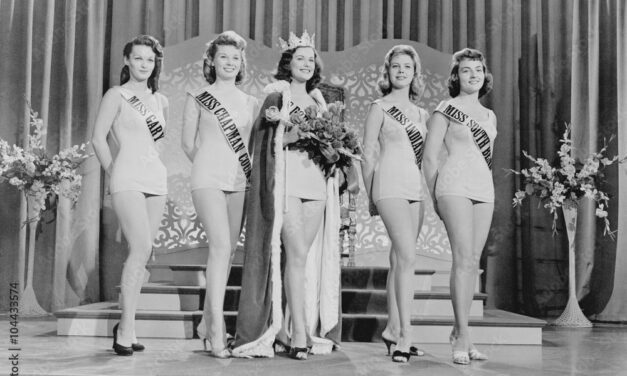
Sheena Monnin (“Sheena”) was “crowned” Miss Pennsylvania USA, and this “honor” “promoted” her to the next beauty pageant competition up the line, it being the Miss USA Pageant  (the “Pageant) the winning of which leads to the next and highest level competition, the Miss Universe Pageant. It is the crowning worldwide title.  The social functions of all of these will be ignored here.

Sheena did not do as well in the Miss USA Pageant and she firmly believed she should have done much better. She publicly asserted that at least one of the other contestants told her that she had empirical evidence that the results were rigged, which she–Sheena–apparently herself thought was true. She told the world, in effect, that she had been cheated and that the Pageant was a fraud. Poor Sheena either implied or left the impression that Donald Trump–a narcissistic trumpeter if ever there was one–was involved in this conspiracy.  The informant that she alleges gave her crucial disclosure denied Sheena’s claim about the nature of what she said.

Sheena made these charges on Facebook and then on national television.  At its best, her verbalizations were unwise. On the next step down, the discourse of TV was damnably foolish.  Thereafter, she didn’t even go through an act of presenting some sort of public apology–or something that looked and sounded like one and failed to volunteer to submit to a mouth-shutting injunction.  Probably, if she had done this forthwith and publicly announced that she had not known what she was talking about or what she was doing, she probably would have saved herself from a lengthy and very unpleasant period of there being a contemptuous “super-swirl” into which she was caught up–it making her life maximally miserable.

Some have suggested that her oral performances followed by her verbal omissions, were the result of a certain kind of typhoon-sized hubris, in other words, her self-image was intensively narcissistic and she has simply projected it onto Donald.  Some believe she should get therapy.  (Perhaps, Donald might pay for it, if she said she was crazy and desperately needed help, and then do the apologizing after she got out.) Switzerland is a nice place for this sort of thing.

In any case, Sheena had signed a contract with Pageant which required that all relevant disputes go forward by means of arbitration.  Once served, Sheena hired a lawyer (L) from Philadelphia.  He refused to interact with the plaintiff, Pageant, in a variety of ways, e.g., refusing to participate in mediation and probably in other ways.  (There were other ways for Sheena to find ways out of her troubles, maybe: “Good God. I can’t believe I said something so false and insane. I must have gone crazy because of the stress.  Heavens! How can I make things right?”) A confession by Sheena that she was crazy at the time of her utterances and thereafter might even have suspended the arbitration itself. Sheena needed sound advice. L refused to cooperate in any way. Some say she should have offered to enter a convent for a while.

L took the position, among others, that Pageant had no authority to institute an arbitration since the contract had come to an end. Eventually, he informed his client that since he was licensed only in Pennsylvania, he could not help with the arbitration since it occurred in New York.

Various lawyers laughing about this in bars have a number of reactions:

L should be disbarred. L should be sent back to any law school that would take him. L should be horsewhipped. L should seek a teaching position at the University of Phoenix or somewhere equally prestigious. L should be sued for a number of transgressions. Sheena should somehow join forces with Pageant to ruin L, and if that took an apology, an attack on L and almost anything else Pageant wanted, except for acting out parts of Chapter 26 and 29 of The Prune in the Silver Bowel, a classic of 14th-century Japanese poetry.

The splendid opinion of the able arbitrator was 19 single pages and it is virtually exempt from further criticism. Empirically and logically the very model of a modern major “arb” opinion. It is that good!  The district agreed and said so, roughly.

The pageant went to federal court to get the arbitration award vacated.  The district judge, of course, lacked any justification. After all, he said, there was controverted evidence that BP (“British Petroleum,” in former days) canceled its support for one of Pageants pageants, this one in a Gulf state. Hence, complained Pageant, the contest had to be moved to Las Vegas.

The judge seemed somewhat sympathetic to poor Sheena.  He agreed that L was atrocious. Unfortunately,  he also said, Sheena was stuck with her lawyer.  His mistakes are her mistakes since he is her agent.   One can only hope that Section II.B.3. becomes a classic of its type.

Read More

Quinn Quotes

Asserting a proposition one believes in a certain situation and asserting its opposition in a substantively different situation, is not necessarily inconsistent. Neither one, taken alone or together, entails advocacy.~Michael Sean Quinn, PhD, JD, CPCU, Etc.Tweet

The books shown are NOT affiliate links.
MSQ (site) does not receive any compensation for books listed or sold.
Books are shown for the reader's convenience only.

Newsletter

Michael Sean Quinn, PhD, JD, CPCU, Etc*., is available as an expert witness in insurance disputes and other litigation matters. Contact
